简体中文
简体中文

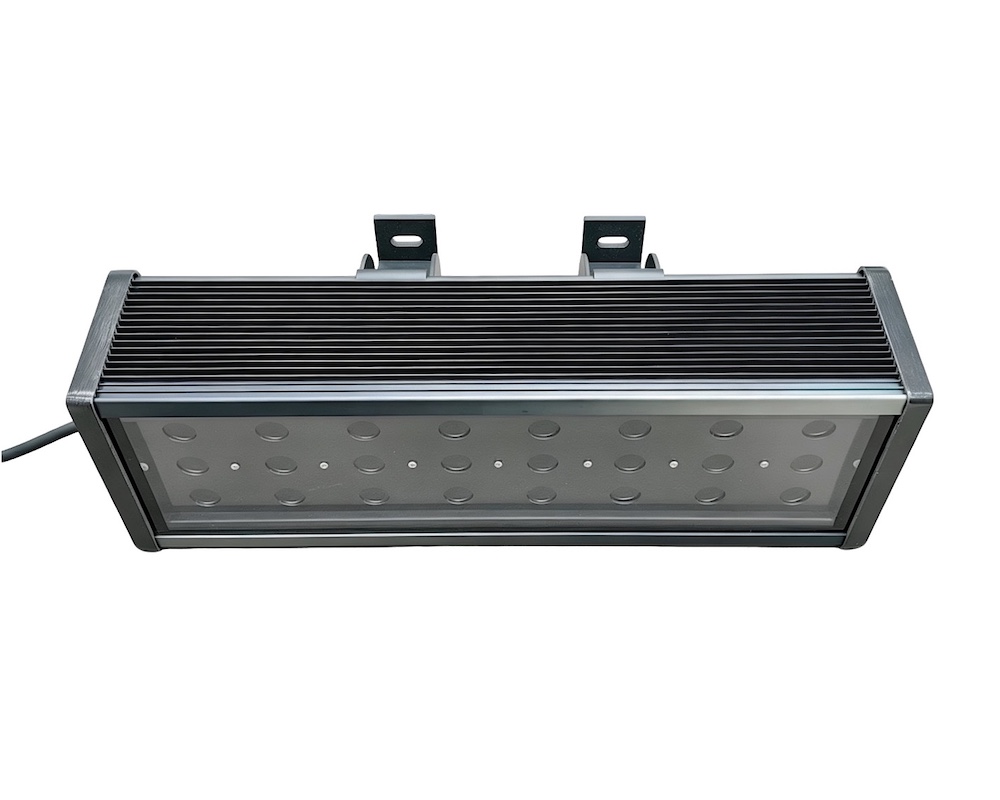
In a study published in Frontiers in Plant Science (Huai et al., 2023), researchers from the Oil Crops Research Institute of the Chinese Academy of Agricultural Sciences demonstrated that DsRed2 red fluorescence protein dramatically improves screening efficiency in peanut (Arachis hypogaea L.) genetic transformation. During the experiment, the team used a hand-held fluorescent protein excitation lamp LUYOR-3415RG with a red camera filter lens to visualize DsRed2 fluorescence.
Abstract
Peanut (Arachis hypogaea L.), one of the leading oilseed crops worldwide, is an important source of vegetable oil, protein, minerals and vitamins. Peanut is widely cultivated in Asia, Africa and America, and China is the largest producer and consumer of peanut. Genetic engineering has shown great potential to alter the DNA makeup of an organism which is largely hindered by the low transformation and screening efficiency including in peanut. DsRed2 is a reporter gene widely utilized in genetic transformation to facilitate the screening of transformants, but never used in peanut genetic transformation. In this study, we have demonstrated the potential of the red fluorescence protein DsRed2 as a visual reporter to improve screening efficiency in peanut. DsRed2 was firstly expressed in protoplasts isolated from peanut cultivar Zhonhua 12 by PEG, and red fluorescence was successfully detected. Then, DsRed2 was expressed in peanut plants Zhonghua 12 driven by 35S promoter via Agrobacterium tumefaciens- mediated transformation. Red fluorescence was visually observed in calli and regenerated shoots, as well as in roots, leaves, flowers, fresh pod shells and mature seeds, suggesting that transgenic screening could be initiated at the early stage of transformation, and continued to the progeny. Upon screening with DsRed2, the positive plant rate was increased from 56.9% to. The transgenic line was then used as the male parent to be crossed with Zhonghua 24, and the hybrid seeds showed red fluorescence as well, indicating that DsRed2 could be applied to hybrid plant identification very efficiently. DsRed2 was also expressed in hairy roots of Huayu 23 via Agrobacterium rhizogenes-mediated transformation, and the transgenic roots were easily selected by red fluorescence. In summary, the DsRed2 is an ideal reporter to achieve maximum screening efficiency and accuracy in peanut genetic transformation.
DsRed2 Fluorescence Observation with LUYOR-3415RG
The fluorescence in protoplast cells was examined under a laser-scanning confocal microscope (Olympus FV 10-ASW). The fluorescence in callus and samples form transgenic plants were observed using a green-light hand-held fluorescent protein excitation lamp LUYOR-3415RG (LUYOR, China), with a red camera filter lens.
Photo below: Observation of DsRed2 expression in peanut protoplasts under the fluorescent protein excitation lamp LUYOR-3415RG
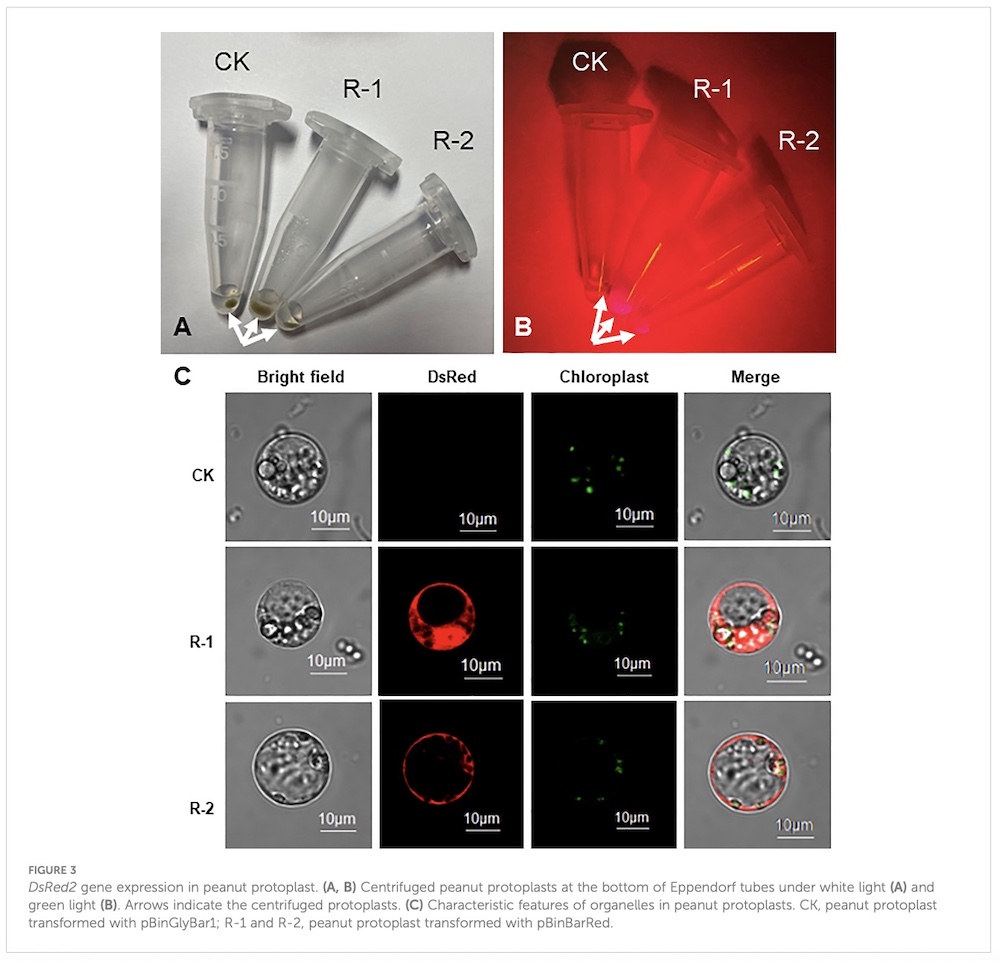
Photo below: Observation of DsRed2 expression in peanut callus, different tissues and organs under the fluorescent protein excitation lamp LUYOR-3415RG
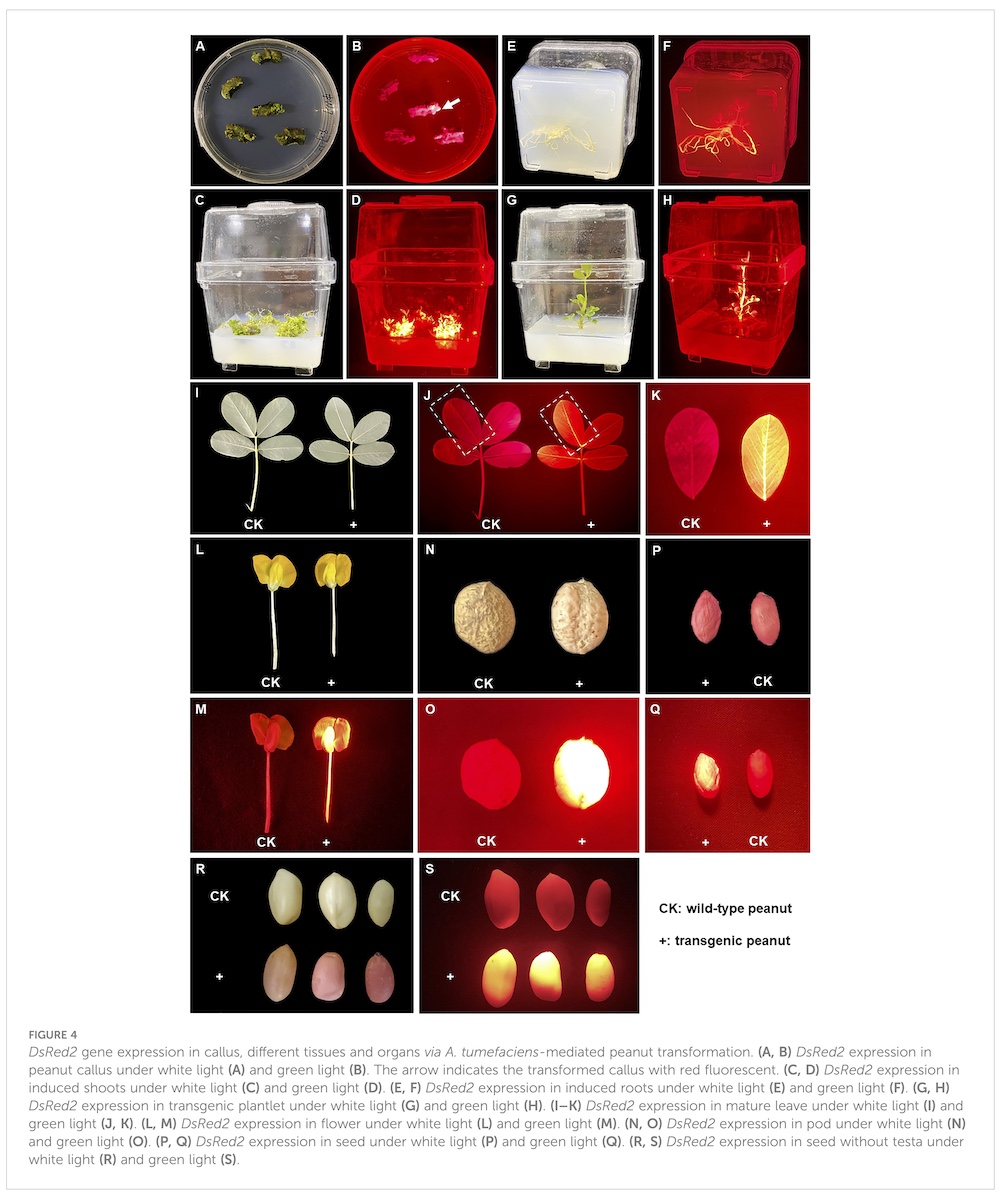
Photo below: Observation of DsRed2 expression in peanut seeds under the fluorescent protein excitation lamp LUYOR-3415RG
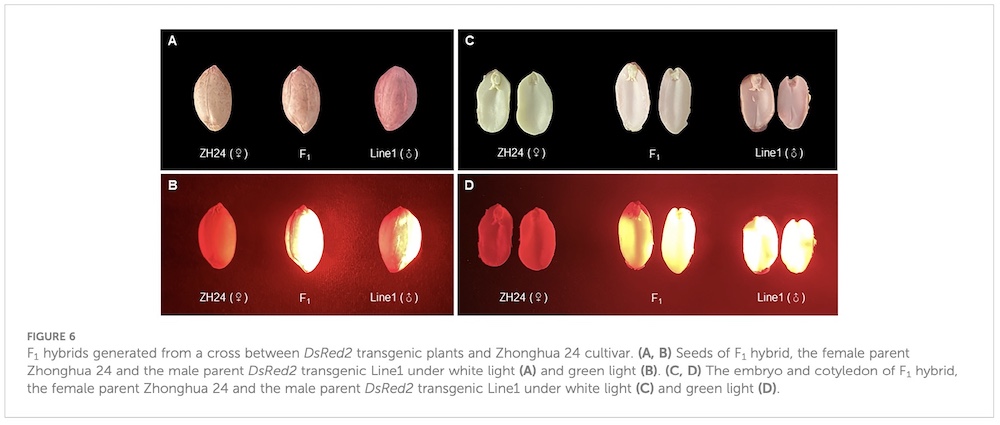
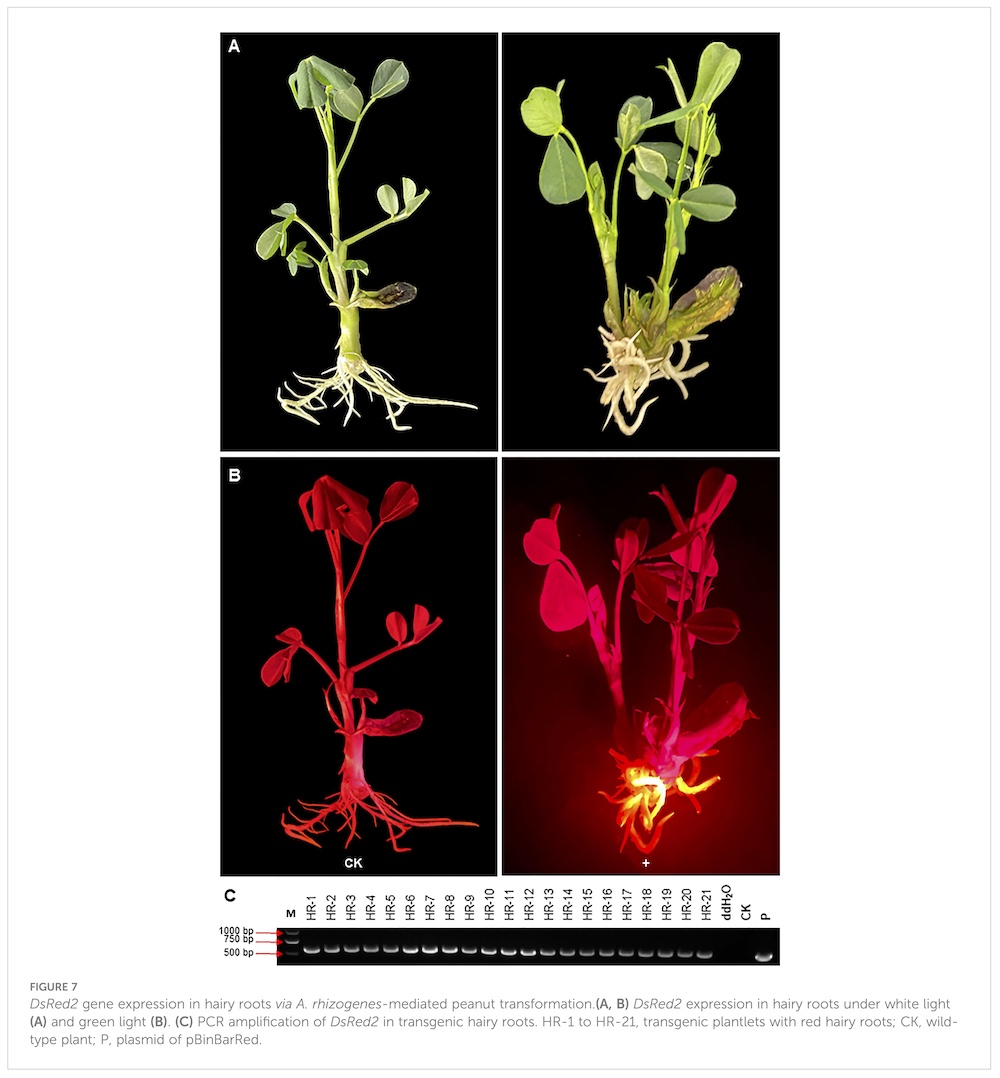
Photo below: Observation of DsRed2 expression in peanut hairy roots under the fluorescent protein excitation lamp LUYOR-3415RG
Reference
Huai, D., Wu, J., Xue, X., Hu, M., Zhi, C., Pandey, M. K., Liu, N., Huang, L., Bai, D., Yan, L., Chen, Y., Wang, X., Kang, Y., Wang, Z., Jiang, H., Lei, Y., Varshney, R. K., & Liao, B. Red fluorescence protein (DsRed2) promotes the screening efficiency in peanut genetic transformation. Front. Plant Sci. 14, 1123644 (2023).